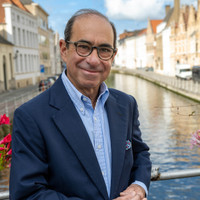
Navigating the Atlantic is an euradio podcast series produced in partnership with the Chair of Transatlantic Trade and Economy of the College of Europe (in cooperation with Microsoft). As global challenges multiply on numerous fronts – namely security and defence, democracy, trade, climate change and energy among many others – this podcast series aims at navigating the currents underlining transatlantic affairs, to shed light on all dimensions and complexities of this historic partnership. In each episode, journalist Lolla Sauty-Hoyer from euradio welcomes one guest and showcases their personal outlook on the state of transatlantic relations in a fireside-chat-like setting. This series is made possible by the participation of the students of the Master of Arts in Transatlantic Affairs (MATA) program of the College of Europe, who contribute to the preparation of these interviews with their precious expertise.
Since January 2025, Transatlantic Relations have entered a period of unprecedented turbulence. Washington's provocative statements on Greenland, the partial suspension of aid to Ukraine, growing doubts over NATO commitments: for many Europeans, something fundamental has broken down. But has it really? And perhaps more importantly, how is this moment being experienced in Warsaw, Tallinn, or Riga? The capitals that have been sounding the alarm about the Russian threat for decades.
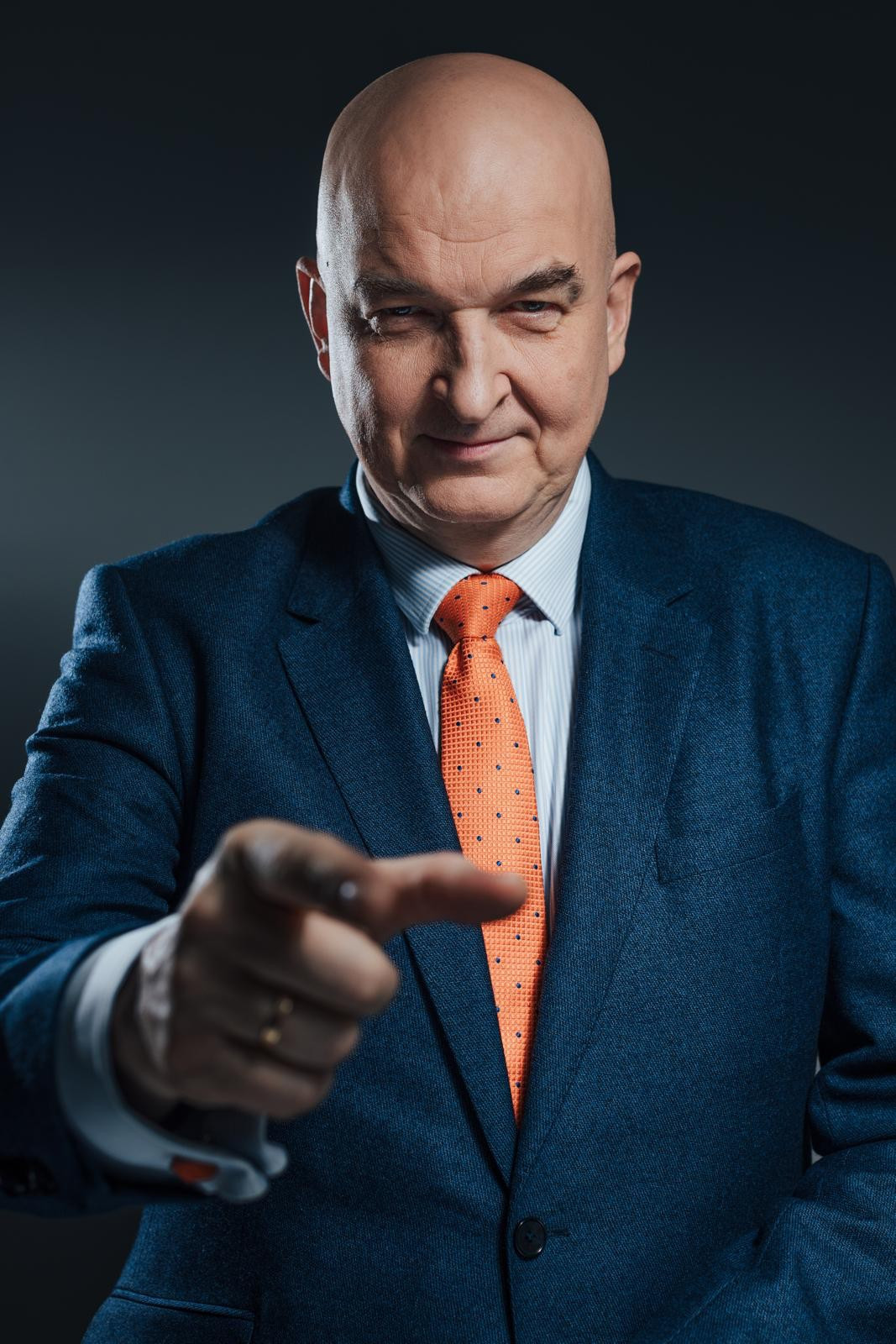
To discuss this, we are joined today by Sławomir Dębski, associate Professor at the College of Europe, Natolin campus in Warsaw, a historian by training and specialist in strategy. He is the author of several books on European security.
So as I said since January 2025 many Europeans have felt they were witnessing a historic rupture in Transatlantic relations. Is that how you see it from Poland and do you consider this a temporary crisis or a structural shift in American foreign policy?
We have to bear in mind that tensions in Transatlantic relations, it is kind of the nature of this relationship. The background is quite simple. There is a geographical distance between the United States and Europe. There are cultural differences and there are last but not least also strategic differences. Since at least 2014, if not 2018, we are witnessing in Europe a serious challenge/even threat to European peace.
Russia again will start to use force as a tool of achieving foreign policy interest. Something which we actually believe to erase from the European toolbox for good. While the United States is mainly preoccupied with the rise of China and it's not only present in the US administration but we have been hearing that the United States are going to pivot to the Pacific at least for 20 years.
So obviously there is a gap of our perceptions and there is a gap of interest.
And yet, you're saying this gap is not new.
As I said, it's not the first time we experience in Transatlantic relations very serious clashes, tensions, upheavals. Once, one can remind our listeners, that there was a time when the headquarters of NATO was in Paris. Then, because of political tensions and very vibrant and sometimes dramatic discussions, the headquarters were moved to Brussels.
Then we had, you know, very dramatic discussions around American intervention in the Middle East. So it happened, sometimes this difference of perception clashes. But I believe and that's our perspective, the United States is not going to drop Europe for good. They communicate to ask that what they want is a different division of labour. They want Europe, which they perceive is relatively stable, rich and competent to provide much more to transatlantic security than the last 30 years. So, they expect us to do more but they're not withdrawing from Europe completely.
Even if as you said the situation is not entirely new, what has been the most alarming moment for central and eastern European capitals since Donald Trump's return to the office?
The way US policy is being conducted is not particularly helpful. Definitely you know all this row about Greenland about the Arctic about how this, again, division of labour between the United States and other allies including Canada and European allies should be shaped. That was I think the issue which created or triggered a lot of bad blood on both sides. I think the misunderstandings were also widespread. You know nobody knows in Europe what Donald Trump's intention actually is.
It is obvious that, had there been said from Washington that our issue, or from the point of view of the United States, the issue is to provide more security to our Atlantic, European partners, European allies would be willing to contribute because, you know, the Arctic is our common concern. But the way how this policy was introduced and then communicated was not particularly helpful.
Central and Eastern European countries have long been the most Atlanticists in Europe. But between the suspicion of it to Ukraine, the hesitation around troop deployments in Poland and security commitments that now seem tied to political affinities rather than strategic necessities, would you say that trust has been permanently shaken?
Well, trust in politics is very kind of the vogue of our category. First, we have to remember that conducting policies is a process. The process usually depends on domestic politics, then intergovernmental politics and only after these two processes are somehow completed, we have result in foreign policy. So I would say that we do not see any signs of the United States [being] less interested in providing security to NATO Eastern flank.
We see and the recent, quite recent signals coming to Warsaw are that it's quite possible that we will see even more American engagement and perhaps even permanent engagement on the Eastern flank and particularly in Poland. So yes, you know, all this noise about, you know, trust, about confidence, about decision-making process in Washington… well, it is concerning, yes. It creates, you know, public turmoil, but ultimately I think this relationship is quite solid and I do not see big question marks whether the United States are going to contribute to providing peace in Europe.
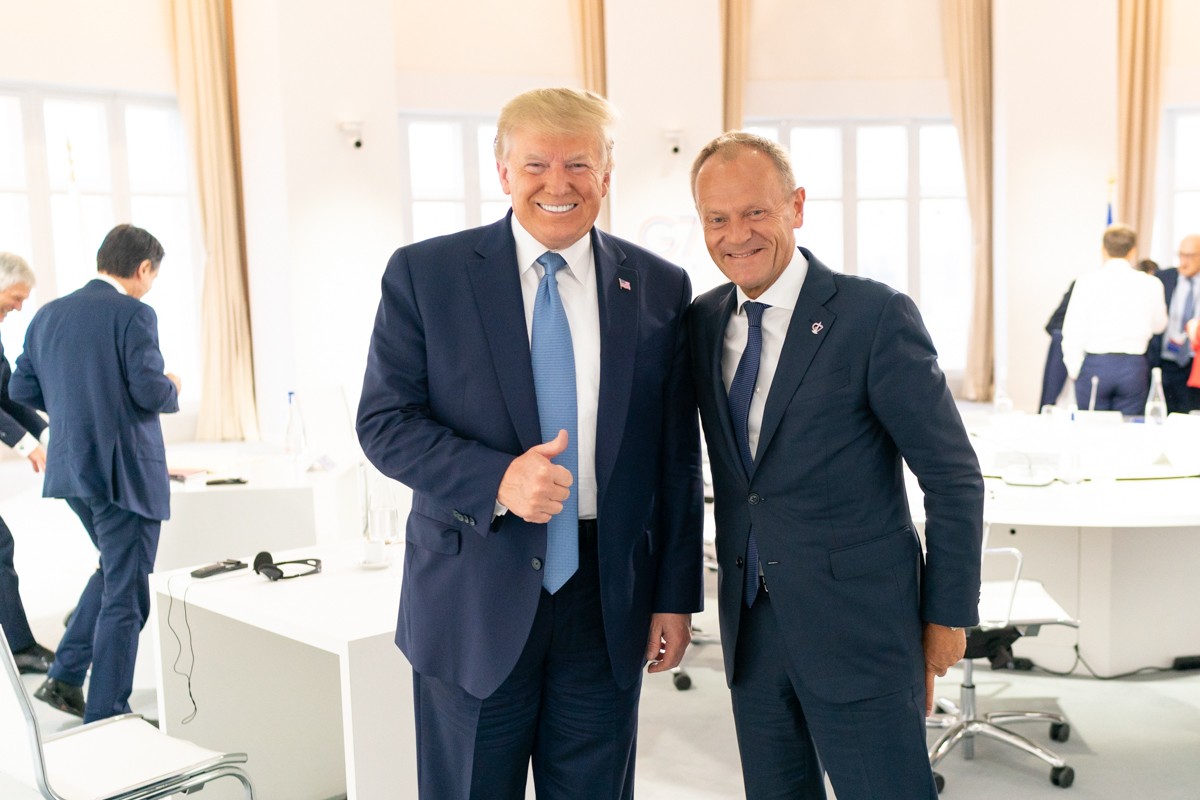
In Brussels and Washington one hears that Eastern flank allies are regarded as model allies. They spend a reasonable share of their resources on defense. They fulfilled their commitments under Article 3 of the Washington Treaty and are serious about the world security. Some speak of a strategic center of gravity shifting eastward, with Poland now NATO's top defence spender in terms of share of GDP. Do you agree with that statement?
Not really. I do not like this kind of framing. You know, I remember that say 10 years ago some people were claiming that Afghanistan is the centre of world's security. It had never been a centre of world security. We should not misinterpret the centre of political and power gravity with the centre of attention. It is quite clear that because we are neighbouring to Russia and Russia is a challenge for peace in Europe, the primary challenge for peace in Europe, attention to the eastern flank is growing and of course, you know, Eastern flank and Ukraine ; we have to also mention Ukraine, in this context, is growing.
But it doesn't mean, in my view, that we should jump to the conclusion so easily, that the power center of transatlantic relations of European politics moves east. I do not see it like that. Public attention, political attention, yes. The challenge in Eastern Europe is there, but it does not mean that the powerhouse of Europe and all the future powerhouses of Europe would move east.
For years, Poland and the Baltic States warned their Western partners about the Russian threat, often without being heard. Do you feel that today Western Europe has finally come around to that world view?
I think that [there is] kind of a harmonization of views on Russia in Europe. Polish or Baltic States or Finland concerns about the direction of Russians of policy development, internal and foreign policy development were based on historical experiences. Now, I think the whole of Europe is experiencing what the countries neighboring to Russia have already known. There are concerning tendencies in Russian foreign policy that Russia behaves aggressively. And I think that is the most crucial thing. That it is not rhetoric which is concerning.
Because sometimes I have heard that, you know, we should distinguish words from deeds and as long as Russia's deeds are not so much concerning, we should continue with, I do not know, building bridges with Russia and gauge our engagement. So, the concerns of countries, of nations on the Eastern flank was always that words do matter and should not be neglected, because after aggressive statements, deeds may follow.
And they did follow.
So, now I think the whole Europe from Rome, Madrid, Lisbon, to Tallinn, Helsinki, and Warsaw are on common ground, that Russia is a major threat to our peace in Europe. We can hear this conclusion in the political statements of leaders. We can read this conclusion in strategic documents that have been published recently in various countries of Europe.
So I think yes, there is an understanding that Russia is not a peaceful country. That Russia resorts to use of force, wages war or again wages war to achieve political objectives and we cannot tolerate it. I mean the cost of war has always been very, very high. So I think there is a kind of the common perception, common understanding in Europe now that we have to do everything we could to prevent widespreading Russia's understanding of European security further West.
And this European response should it necessarily be built with the United States?
Well, I don't see any reasons why we should say that we don't need Americans there. Definitely, you know, because of American engagement in Europe, we experience a wonderful time, kind of a free ride. We cut defence spending exactly because Americans stayed in Europe after the Cold War. They provided a kind of security umbrella to, you know, both sides of Europe. I mean sides shaped by the iron curtain during the Cold War.
You know their presence, their commitment facilitated the process of EU and NATO enlargement. So, definitely they were a key factor. The problem is now that they say that the forces, the power, the demand for American power is too high and they cannot do everything around the world to keep the world safe and on.
And is this really a Trump-specific message, or something deeper?
They approach us with a very clear message. And I need to underline that it's not Trump.
We have been hearing this message from Washington, from the Obama's administration almost 20 years ago. Biden administration, Trump administration. So this is a kind of the bi-partisan call to Europe that we should take a much greater burden for our own peace and security. We should contribute to the common cause. And we can afford it, actually. So, of course, it's painful because the political decision to redirect our financial assets to the defense is needed. But all in all, we need to agree with them if we want Europe to stay at peace, we need to invest in a peaceful Europe also [with] our own money. Not only resting on what American taxpayers are willing to do in this respect.
So Sławomir Dębski to conclude, what are the main lessons that Central and Eastern Europe has drawn from the 2025/2026 period?
I think that it is not a question of, it is not a lesson only for Central Europe. Well, I think it is an important lesson for the whole continent, for all Europeans. For the last three decades, we believed that the American contribution to maintaining peace in Europe is enough. So, if Americans are there, Americans are engaged, if Americans are paying for maintaining peace in Europe, it is enough. And we can focus on other things. We can spend Europeans’ money on different projects. Now they say they cannot afford to do that. So we have to adjust ourselves to this new environment. We need to spend more. And I think Poland is leading the way. Countries of the Eastern flank are leading the way.
Well, to conclude our conversation I would [like to] reintroduce the famous statement of President Kennedy, who during his inaugural speech said famous words: “Don't ask what the United States can do for you. Ask what you can do for the United States”. So I think we should paraphrase this famous sentence and say that the Europeans should not ask what the United States can do for Europe, or transatlantic relations. We should rather ask first what we can do for transatlantic relations, how we can contribute to defence and peace and security in Europe. And only then show our capabilities, our will, our contributions to Americans to say that and with the very clear message that Europe can afford to become reliable, rich and capable towards the Americans.
And I believe that if Europe contributes more, the transatlantic relations would only flourish.
Sławomir Dębski, let me remind our listeners that you are associate Professor at the College of Europe, Natolin campus in Warsaw, historian by training and specialist in strategy.
That was Navigating the Atlantic. An euradio podcast series, produced in partnership with the chair of Transatlantic Trade and Economy of the College of Europe and in cooperation with Microsoft. The podcast of this episode is available on euradio's websites and on your favourite podcast platforms.
This episode was prepared with the support of MATA Assistant Marie Ketterlin.