
Navigating the Atlantic is an euradio podcast series produced in partnership with the Chair of Transatlantic Trade and Economy of the College of Europe (in cooperation with Microsoft). As global challenges multiply on numerous fronts – namely security and defence, democracy, trade, climate change and energy among many others – this podcast series aims at navigating the currents underlining transatlantic affairs, to shed light on all dimensions and complexities of this historic partnership. In each episode, journalist Lolla Sauty-Hoyer from euradio welcomes one guest and showcases their personal outlook on the state of transatlantic relations in a fireside-chat-like setting. This series is made possible by the participation of the students of the Master of Arts in Transatlantic Affairs (MATA) program of the College of Europe, who contribute to the preparation of these interviews with their precious expertise.
NATO and the pressure of a war in the Middle East conducted without European input, trade tariffs weaponized as diplomatic tools and a 5% GDP defense spending target that would have seemed unthinkable just a few years ago. One year and a half after Donald Trump’s return to the White House, almost every assumption underpinning the transatlantic relationship has been stress tested. Some have held, many have not.
Welcome to Navigating the Atlantic, this second season’s first episode. Today we are asking the question that frames this entire season. Is the Atlantic alliance still an alliance in any meaningful sense or is it becoming an alliance in name only ? To help us navigate this, I'm joined by Ian Lesser, distinguished fellow at the German Marshall Fund of the United States in Brussels and chair in Transatlantic Affairs at the College of Europe in Bruges, Belgium. Ian Lesser, welcome back to euradio.
It’s a pleasure to be with you. Thank you very much.
So, Ian Lesser, the last time we spoke was in March 2025, at the very beginning of Donald Trump's second term. At that point, you said that Washington's unpredictability was precisely what Europe was least prepared for. Now roughly a year and a half later, has reality exceeded your fears?
Well, I think I was right, but of course I'm not alone in saying this. It's quite striking that one year or more on, I am not sure that Europe is any closer to understanding how to deal with the Trump administration than they've been, you know, for the past year or indeed in the previous experience with Trump in his first time in office.
Unpredictability is simply the hallmark of his administration and I think it's affecting not just the security agenda but trade, energy policy, many other things. And of course style which matters a lot in transatlantic diplomacy.
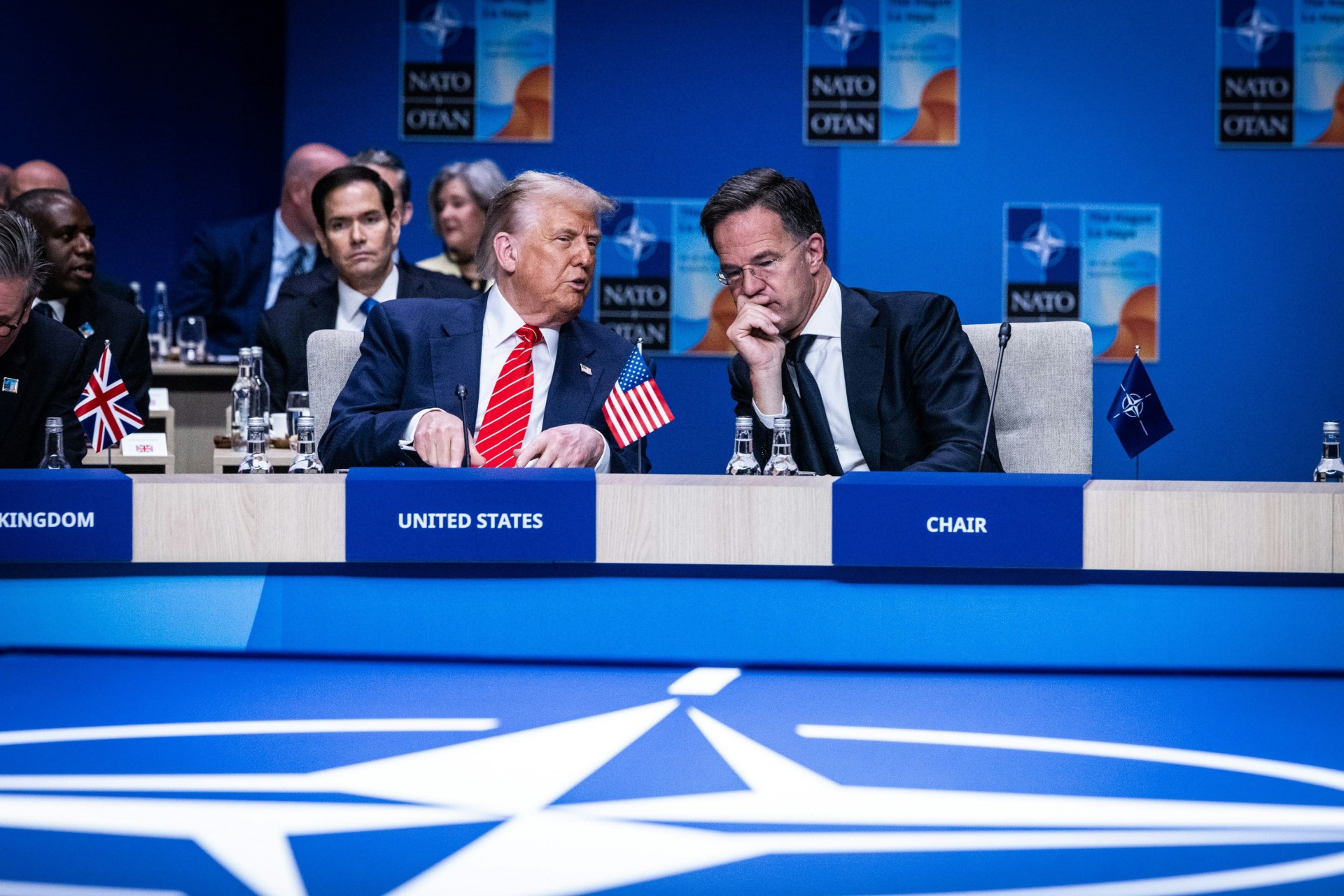
In June 2025, NATO allies agreed at the Hague to a 5% GDP defense spending target : an unprecedented figure extracted under heavy US pressure. Some observers call it a capitulation, others said Europe had no choice. Where do you stand?
Well, the truth is that, you know, multiple American administrations have come with the same request about burden sharing and for Europe to spend more and do more in defense. So that wasn't new. The style of it was obviously much more strident. And it also comes against the backdrop of a war in Europe, Ukraine.
And so, you know, there are many reasons for Europe to spend more and do more. Trump's pressure is only part of that equation. And so, I think at this point, this burden sharing, defense spending aspect is in a way priced into the relationship. It's not surprising Europe anymore. The other aspect, of course, is that the Trump administration has coupled this with a threat for the United States to disengage, even withdraw from NATO. I don't think that's likely.
But certainly, Washington can make life inside the alliance very difficult if it wants to. So, really it’s those three things : it's the style, it's the threat, and it's the reality of a conflict in Europe.
More recently the US-Israel strikes on Iran in February 2026 were conducted without meaningful European consultation. What does that decision due to the credibility of the US security grievances in Europe and to what extent did it accelerate the transatlantic rift?
Well, I think it is added to a growing roster of crises in the transatlantic relationship. Which when it comes down to it, are really crisis about trust, whether we're talking about trade or we're talking about defense.
On the Iran war, I think the administration has been keen to have Europe support it at least rhetorically and to provide the kinds of operational support in Europe actually, that Europe historically has provided for operations of that kind, not always but usually.
You know, there's growing reluctance in part because of public opinion, but also I would say political opinion in Europe is increasingly critical of the war and Europe is, I think, increasingly resentful of being asked to contribute to something they did not choose and would have very little role in setting strategy for in the future. So I think the prospect of Europe doing more at least at the moment is very limited.
Of course, it also points out the enormous gap in capability between the United States and Europe in terms of being able to deploy forces to even fairly nearby regions like the Middle East and North Africa, for example, in the Mediterranean. The United States simply has a lot more capacity and if you go further than that to the Gulf and beyond the difference is overwhelming.
There's also a very big difference in attitudes towards the use of force and I think the crisis in Iran illustrates that very clearly.
Because the Iran war offers an interesting paradox. Donald Trump never built a coalition yet the campaign still depends heavily on European bases, airspace and ports. Does this war reveal that despite other rhetoric, the US still fundamentally needs Europe.
Well, my view is that the United States benefits enormously from the alliance with Europe and vice versa. But we're in a very stressful moment when it comes to transatlantic relations. And, you know, this is not the first time that United States and Europe have not been on the same page when it comes to conflicts in the Middle East. You can think, well, way back, going back to Suez and the resupply of Israel in 1973, the second Gulf War… We can make a long list of these things.
But this has a different feel to it in part because it comes against the backdrop of many other crises and many other areas.
In April, Donald Trump said he was « absolutely » considering withdrawing from NATO followed by the announcement of a troop withdrawal from Germany. Back in 2025, you thought an actual withdrawal remained unlikely. Have you revised this assessment and is it still worth it for the United States to remain in NATO?
I don't think my view has changed that much. I don't know if the administration's attitude about NATO has changed a lot either. It's very critical, but especially when it comes to opinion on Capitol Hill, in Congress and in the Senate, there is still a very large body of support for the Atlantic Alliance. And it wouldn't be easy for the administration either politically or indeed legally to withdraw from NATO.
That said, if the administration wanted to press it, we could add to this the dispute over Greenland, which was very disruptive for the alliance. If the United States wanted to press it, it could become a very difficult partner inside the alliance. It could potentially withdraw from the integrated military command and other things. At the moment, the sort of operational relationship with NATO goes on more or less undisrupted. But how long will that last?
You know, we do need to ask the question. NATO is coming up on a very critical summit in Ankara at the beginning of July. It's unlikely to be an easy conversation.
Chancellor of Germany, Friedrich Merz called the US humiliated by Iran and the Greenland episode where Washington threatened tariffs to cause the sale of Danish territory, shocked European capitals. What does these episodes taken together reveal about the nature of the transatlantic relationship today according to you?
Well, I think it goes back to this deep crisis of trust. It's deep, but it's also multifaceted. I think it is affected by the fact that today a lot of the issues in transatlantic relations don't stay in their lane, if I can say.
Trade policy, defense policy, attitudes towards politics on both sides of the Atlantic… These things are all becoming very difficult to manage and the trade-offs are not easy. There's a lot of resentment for the United States in Europe. For example, the way in which key US political figures from the administration have weighed in in elections in Europe. This is widely resented.
Of course, it's not unprecedented in transatlantic relations, but it has a different feel to it at the moment precisely because of this erosion of trust.
And on files like Palestine where several European countries recognized Palestinian statehood, or the case in Venezuela, the gap between Washington and Europe seems to be wide. Would you say this reflects a more assertive, independent European foreign policy, or is it still more reactive than strategic?
I think it also reflects a certain amount of frustration and the difficulty of doing that. I mean, deterring an increasingly aggressive Russia is not an easy thing for Europe to do alone. Europe is contemplating, you know, a more independent nuclear policy. Again, not easy.
But I think there are some very different views about ideology and politics and these are making themselves felt whether we're talking about Venezuela, or we're talking about Israel and Palestine, Gaza… many other issues where the US and Europe simply are not on the same page. On top of that there are the trade issues and many other things.
I mean, Europe is already anxious about its security and anxious about its economic competitiveness, even anxious in different countries about political futures. Having this kind of stress across the Atlantic simply makes it worse.
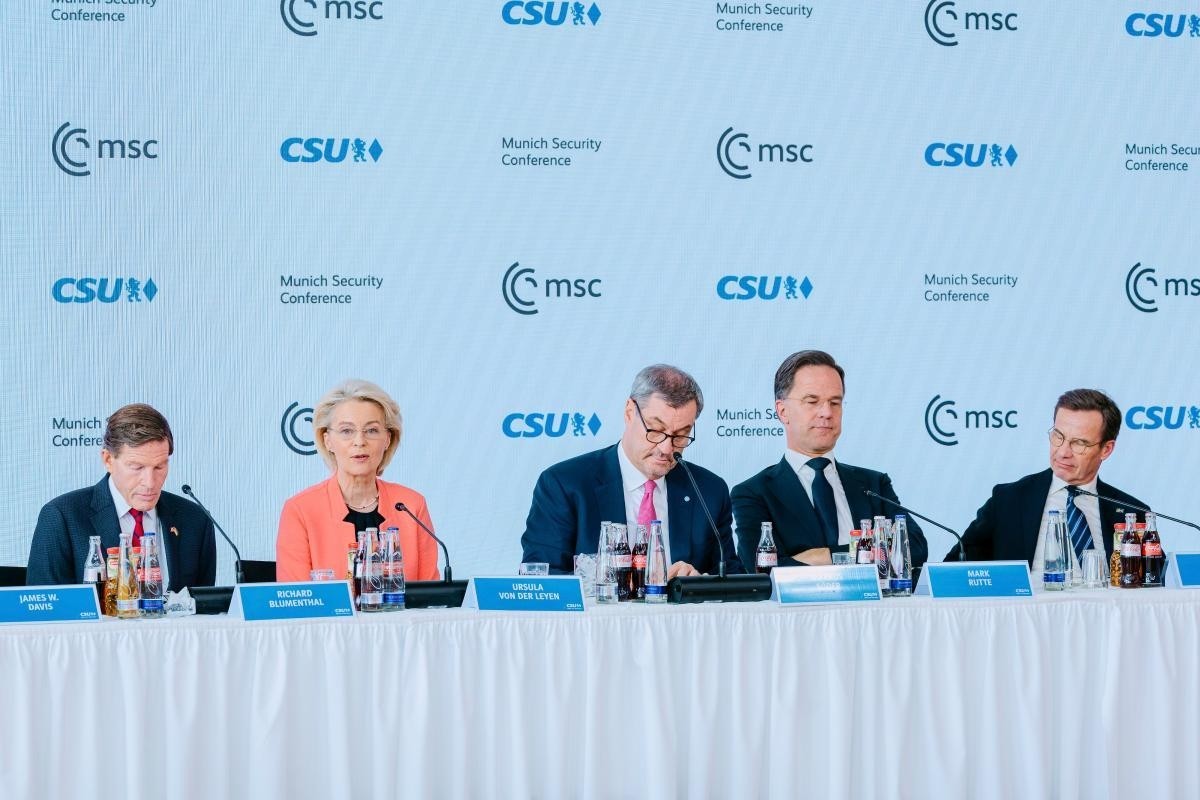
In Europe, Emmanuel Macron, Friedrich Merz or even Ursula von der Leyen all called for greater European strategic autonomy at the 2026 Munich Security Conference. Does Europe actually have the industrial, political, and financial capacity to back up that rhetoric? Can it genuinely do without the United States?
Well, obviously it's not preferable to do without the United States, but what is almost certain is that Europe is going to have to do more. And the United States will be increasingly distracted by other things in other parts of the world. I think that's true no matter who is in the White House.
In a sense, perhaps President Trump has given history a shove and the style is very aggressive but Europe could face this as an ongoing challenge. So I think there is a serious commitment to doing more, spending more, building more capability in Europe. But it's not easy. It's not easy because Europe will spend more money, but is it for buying the right things?
Europe may build a stronger defense capability, but are people willing to to accept the use of force in a way that Europe hasn't necessarily had to confront for decades? Those are uncomfortable conversations in Europe I think. I do think it's absolutely true that NATO, 5 or 10 years from now will be a much more European alliance. But it will still be there. My prediction is it will still have the United States in it.
I think the European Union will help raise greater money for defense and innovation, but in a sense NATO will be the beneficiary of that. I also think that many Europeans are more comfortable in talking about defense spending as industrial policy than as about defense per se.
Precisely because given the history here, it raises all kinds of very, very difficult questions about use of force, about power, about relationships inside Europe, about the relationship between society and the military. All of those things which Europe hasn't had to confront directly for some time are coming back in a very vigorous way.
And on that note, the EU-Mercosur deal is now provisionally in force in the beginning of May. Is that a signal of a genuine strategic reorientation towards new partners?
I think it does signal that. And I think the key European leaders have been very clear about that. This is not a new strategy for Europe, but some of these things have been in the works for a long time. They're now becoming reality in part because there is this desire to hedge in a way against this increasingly uncertain relationship across the Atlantic. And there are other examples.
Mercosur is one, but also with India, also with Canada. So yes, Europe may have to make some compromises when it comes to agriculture, industrial policy and other things in order to make all of this happen. And they're not so much defense relationships of course, but they are about Europe's weight in the world, and I think they're a sign of what is coming.
One last question, Ian Lesser. In March 2025, you left open whether this moment was cyclical or structural. Today after everything that has happened, do you think we are witnessing the end of the transatlantic partnership since 1945 or would you say that it's a painful transformation that could lead to something new?
I think this is the key question, of course. And it is widely debated in Europe. Widely debated in the United States too, let me say. I think that what is cyclical is the style.
You know, this administration has a particular strident style when it comes to many of these issues. I think the tendency to conflate, to put together issues of trade, security and other things, politics, is sort of uniquely associated with this administration. It's not that it hasn't happened in the past, but it's very, very explicit today. So, that could change. What is structural?
What is structural is that the United States has other distractions in the world, not least the rise of China and requirements in Asia. And that was heavily discussed in Europe well before the Trump administration in either term. So that’s structural. And then, of course, what has happened is that the world has changed around us. Both the United States and Europe are not living in the same world they lived in 5 or 10 or 20 years ago. And that is a structural shift.
Where it leads us exactly, I'm not sure, but I'm quite sure it won't leave us in the same place that we knew. I think one of the things that we need to keep our eyes on has to do with how public opinion in Europe and in the United States evolves with regard to the other. You know, many organizations have done polling around this, the German Marshall Fund has done some, others have done it over the years.
What has always been very clear, is that European attitudes in particular, about the United States and its policies are driven very, very heavily by the perceptions of the president in office. We have many examples of this positive and negative. So we'll have to see where that leaves us. We have mid-term elections coming up in the United States in November, these are very critical ones.
If polls are correct, it could result in a fairly major shift of power on Capitol Hill. If Democrats were to take back both houses of Congress, this would be a huge constraint on what the administration can do. It won't necessarily change their outlook, it won't necessarily change the discourse, but it will have some very important practical implications including on things like NATO and trade policy.
Ian Lesser, let me remind our listeners that you hold the Chair in Transatlantic Trade and Economy at the College of Europe in Bruges, Belgium. You also are Vice President of the German Marshall Fund of the United States in Brussels. Thank you so much for your time and for answering my question.
That was Navigating the Atlantic. An euradio podcast series, produced in partnership with the chair of Transatlantic Trade and Economy of the College of Europe and in cooperation with Microsoft. The podcast of this episode is available on euradio's websites and on your favourite podcast platforms.
This episode was prepared with the support of MATA Assistant Marie Ketterlin.